
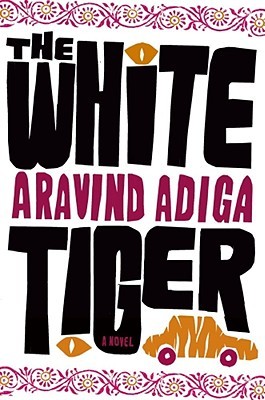
 “The White Tiger” is a written confession from an Indian driver who murders his employer. It is told with matter-of-fact nonchalance by Balram Halwai. A man who grew up in the slums of India, “overcame” his birth status, became a #1 driver, a murderer, and finally an employer himself.
What can one say about a book such as this? I look at the some of the reviews and I wonder how it can have such a low rating. Is it because people are turned off by the matter-of-fact tone of Halwai? Are they disenchanted with the unsaid social commentary of India? Are they disgusted with the story that Halwai tells? Are they dissatisfied with “justice” in the world Adiga paints? Are they waiting for the author to tell them what to think? Are they waiting for Halwai to justify his actions? To show some redeeming quality, allowing you to forgive him? Are they the type that think every novel should have a beginning, a middle and an end? Do they expect happily ever after?
Here’s the thing….This might be Adiga’s story….it might also belong to Halwai….one can say it even belongs to all of India…but the thing is…this is the reader’s story as well. What you take from this story is what you put in to it. Aravind Adiga is young author…but he’s smart enough to know that sometimes the best novels are the ones left to the reader to decide. Some travesties don’t need pointed out. It might seem that Halwai has no feelings or is two dimensional…but this is his life. He’s not painting a pretty picture…he’s just laying out the facts. Adiga is the one who is leaving it up to you, the reader, to sort through these facts.
So, once you’re born into the social caste system of India, are you ever *really* able to move from one to the other? Should one be resigned to his/her own fate? Do we follow the customs of generations, even if they are the very same customs that bind us to future failures? Must we follow the way it has always been done, even if that way ensures us that no new path can be forged? Do we never question how things are, simply because they are the way things have always been? Does Halwai really have no feelings about right and wrong? Are is it that he is just so bone weary tired of it all? Does he really not care? Or is he just overcome with so much feelings of hopelessness?
What about nature and nurture? How does that play into how we justify our actions? Can one really blame society for that which we become? Is it possible to justify our actions in our own minds by blaming the limits our society puts upon us?
How can one even begin to change the history of the past? How corrupt does a government need to be before a nation lose all hope for any type of change? Can a person who benefits from a broken social system ever really want to be the one who fights to make it right? Will we ever learn to trust one another? Can someone who has nothing ever be satisfied with that? Should they?
Can an outsider ever *really* understand?
Yes, the questions I have after reading this novel are more than I had before. Will I spend countless hours debating this? Will I look at the world a bit differently now? yes. yes. yes…..yet….Adiga did not ask a single one of these questions. Halwai did not point out a single one either. It’s a brilliant writer that can evoke so much from a reader….that can sit back and not try to lead you down the path to self discovery. That doesn’t feel the need to blurt out the answers…..I thank him for his discipline….
How can I not love a book like this? Yes, it’s ugly and it’s dirty. Yes it’s unfair. Yes, it’s true….it has no beginning…nor even a middle…and certainly no ending. It has no one clear victim. It has no single hero. This is life….pure and raw….ugly and bleeding….helpless and innocent….corrupt and hopeless….
So tell me….what are you going to do about it? Turn the other cheek, give it a bad rating, and hope to forget all about it? Go on then….I dare you to….
Until next time….
Urania xx
Buy it now The White Tiger

 Random Book Muses