Review – The Paris Architect by Charles Belfoure

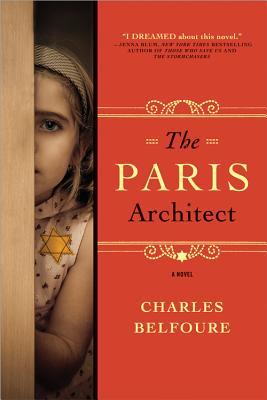
17456328Would you put everything on the line to save innocent people from persecution? Would you hide someone in your apartment, knowing that in doing so, you’ve just signed the death warrant for yourself, your family, and even the rest of the tenants in the apartment building? Well, as tough as these conundrums may be, people in Nazi occupied France made these kinds of decisions every day. One of these people, Lucian Bernard finds himself wrestling with his conscience, sense of practicality, pride, and financial strain, when he accepts a commission to build a concealed hiding place for a friend who makes it his business to hide Jews, and at the same time, accepts a commission from the Germans to build a factory in Paris.
Charles Belfoure’s debut fiction novel, The Paris Architect, has been hailed as being exciting, exhilarating and nerve racking. Belfoure has even been called the next Ken Follet…. Yeah, that kind of put me off as well – I really hate plaudits like that, A) it is lazy writing, B) it is such a big comparison, that it is almost impossible to live up to, and C) every author should be individual…. Anyway, that’s for another musing post later on maybe.
I wanted to read something completely different to what I am currently struggling through (I may either have a really positive review or a really negative review in a few weeks!), and so I thought I’d give this one a go. Let me tell you, I am so glad that I put my initial reluctance aside because it turned out to be one of my favourite books that I’ve read this year!
The writing and pace follows that of a traditional thriller, however, instead of implementing 3 page chapters, Belfoure manages to keep the suspenseful tone and pace throughout decent sized chapters. This is a real telltale sign that an author knows how to write. The characters are very well fleshed out and no one in this novel is “perfect” – each person has their own prejudices and how they decide to prioritize these prejudices is interesting, and sometimes frustrating.
There are some negative points to this novel though: Sometimes the phrases used by certain characters seemed quite contemporary, or Americanized – but then, for all I know, they may have indeed used those phrases in 1941. Another issue with me was the fact that sometimes certain things tied a little too neatly together – however, at the same time, it did show realistic human nature, so I suppose that can’t be too much of a negative. I can’t really explain further as it would give away some major plot points.
Although entirely fictional, the happenings in this novel most likely did occur in Nazi occupied Europe. I love reading about the French Resistance and the dichotomy between the citizens of France that try to survive by joining the Resistance to destroy the German progression, and the other citizens who try to survive by “collaborating” with the Germans in many different aspects. It really does make you think about what it means to survive, what it would take, and how far you can stretch your moral compass. Do yourself a favour and pick up a copy of this brilliant read!

~ Pegasus.
The Paris Architect: A Novel
Review: The Lightkeeper’s Wife: A Novel by Sarah Anne Johnson

IMG_9977.JPG
It’s the 1800s in New England, and Hannah’s husband fails to return to the lighthouse one night. There’s where I thought Hannah began her journey of self-discovery, and navigating her way as a strong woman in patriarchal culture.

But I was wrong. Hannah began that journey when she married John, when she decided to run out in storms and help sea-drenched sailors keep from drowning when their ships went down, and when she disavowed her feelings for Tom.

Hannah had little fear, and demonstrated chin-up bravery even when she was afraid of something. The Lightkeeper’s Wife is about Hannah plowing through life on her own terms, wending her way with a man beside her, without a man beside her, and most importantly with her own balance of masculinity and femininity.

Besides Hannah’s story, the novel explores pirate life. We see men and women fighting, stealing, killing… for freedom and gold. The women pretend to be men for their own safety on and off the ship. And some women remain masculine in dress and manner, because masculine affectation has become part of their soul.

The climax of the novel is when Hannah’s life and a pirate’s life intersect. The characters live as authentically as they can in a narrow-minded society. Families and friends and lovers all just live the best way they know how, without selling their soul completely.

-Calliope

buy THE LIGHTKEEPER’S WIFE

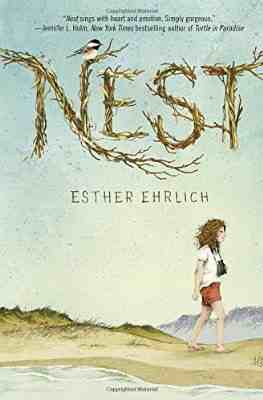
Review: Nest by Esther Ehrlich

IMG_9814.JPG
I generally don’t read children’s fiction, but I wanted to read Nest to get an idea of the usefulness of a book about children grieving. I can report with confidence this: I believe Nest would be helpful for 10-14 year olds with a mentally unstable or absent parent. They would see they are not alone, people grieve and cope in myriad ways, and anger is natural. Young readers could see that maintaining connections — family ties, friendships, or even looser relationships — help distract as well as move a person through his or her bucketful of emotions. Moving forward is key.

That’s my opinion as a mother and a former schoolteacher.

My emotional response to Nest was pretty much bawling my eyes out. A child without two loving parents just kills me… though I know it is so, so common. I felt for Chirp and her sister, for Chirp’s friends Dawn and Joey… Why did they have to suffer? Why did their lives have to be upended?

Yet they found ways to cope. They found ways to hope. They found ways to stick together to fill up a little bit of what was missing.

Nest is well-written, from the sentence structure to the easy flow to the authentic characters. The only niggling detail was about prayer: the author had Chirp uncomfortable saying grace before a meal, or saying the name Jesus. But I’m pretty sure Jewish people say grace (to G-d, not Jesus) and they believe Jesus existed, just that he wasn’t the Messiah. Besides that, Nest was wonderful. The 1970s were portrayed just as I remember them, without being contrived or hokey. And though the ending was sad, I finished the book with the thought that those children were going to make it. They had hope, they had strength, and they had each other.

-Calliope
buy NEST

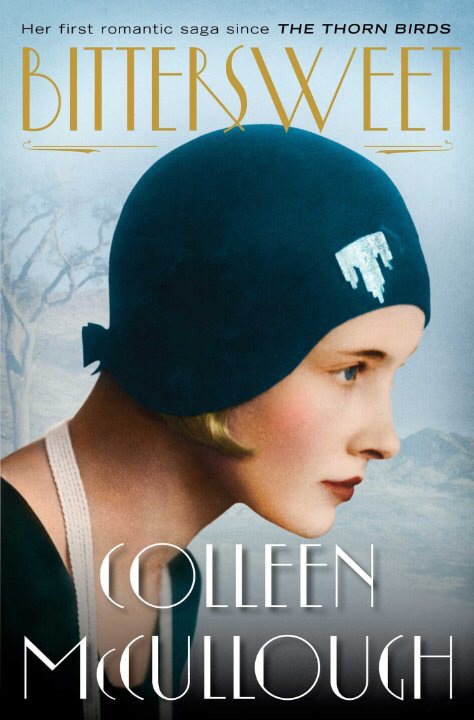
Review: Bittersweet by Colleen McCullough

IMG_9619.JPG
This is the first novel I’ve read by Colleen McCullough, and I am quite impressed with the breadth of information she is able to weave into Bittersweet. It’s a family drama, but it’s also social and political commentary… It’s where romance and feminism meet, and where the power of money makes a difference (for once) in local and regional healthcare.

The history McCullough wrote in — not just dates and places, but people and culture and anthropology – was wonderful. I gleaned as much about Australian politics, economics and society as I did about people’s need for love and acceptance. And McCullough didn’t just stick in facts where she could; she made them part and parcel of the dramatic story.

And dramatic it was. Four sisters, each with wants and needs and quirks… grating on, supporting, loving, misunderstanding, and even betraying one another.

The women rise to meet their fates, and two sisters face life with acceptance… after a few tweaks. The other sisters slap fate in the face, turn around and walk the other direction until they find something better, something real, something they are proud to own.

I really loved the family part of this story. Though no one was perfect, they did love each other immensely, and the author was able to make me feel it and believe it. I liked the Latimer family – flaws and all – because their flaws made them real to me.

The men in the story were less relatable to me, but they had a purpose. Each character, male or female, was more than just him or herself; they represented “Everyman” in their realm. Think of a stereotype, and McCullough represented it via a flawed but likeable character. A widow, a clergyman, a politician, a salesman, a smart (oooooh!) woman, a shrew, a rich man… and so many more. Though it took a bit for me to get through the political descriptions, the cleverly written characters sold me on this solid 4-star read.

-Calliope
buy BITTERSWEET

Review: Mrs. McKeiver’s Solutions by Margaret Morgan

IMG_9361.PNG
This story set in 18th century England was such a treat! Mrs. McKeiver is the local midwife and general mother figure for the villagers. Her son doesn’t have the use of his legs and vacillates between depression and moving forward with his life.

The plot seemed secondary to the characters and setting. Basically, Mrs. McKeiver was remarrying, and her son had to figure out where to go when his mother moved. Other characters had babies, were forced to move to a different home, changed their religious inclinations, and were punished for their crimes.

I’m not big on non-fiction, so this fictional account was the perfect way for me to learn about English villages in the 1700s. The filth stands out in my mind, especially. People stank of sweat, urine, vomit, and disease. Animals stank, period. Food rotted and clothes deteriorated. Author Margaret Morgan employs Chaucer’s manner of slipping in crude bodily remarks in a matter-of-fact way… and always elicited from me a delayed but genuine laugh!

Besides the daily living outlined in the story, I was intrigued by the power that “the church” had on the villagers. Bishops, supposedly representing the Church, were totally in charge of everything, from disbursement of food and jobs to determining where people would live! Of course this autonomy led to corruption, another thread in this novel.

My only complaint is that I was rendered impatient by the rambly writing. I sometimes found myself not wanting to pick up at the next chapter because I knew it require some effort to work through all the words to get to the meat of the story. And so, Mrs. McKeiver’s Solutions was a long-winded but eye-opening, educational, amusing glimpse of a pretend village in a very real period in history.

-Calliope

buy MRS.MCKEIVER’S SOLUTIONS

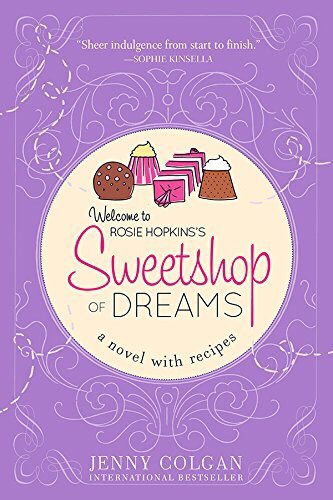
Review: Sweetshop of Dreams by Jenny Colgan

20140806-115106-42666251.jpg
This is a romantic story, in the old-fashioned sense of it being nostalgic and dreamy and sigh-inducing. It blends a historical-coming-of-age story with a contemporary “finding oneself” plot. Rosie leaves London to help her aging great-aunt in the countryside. While she’s there she makes connections that fulfill an emptiness she didn’t even know she had. There’s a happily-ever-after, but it’s a tad bittersweet, kind of ironic for a sweetshop owner. 🙂

I loved Rosie’s story: her capers as a medical nurse, her hilarious clumsy attempts at traveling in the country, and her funny attempts at making friends.

I really didn’t like the flashbacks to Aunt Lilian’s youth. I’d be all into Rosie’s story and then BOOM Lilian’s story would interrupt it. You might like the alternating flashback format, but it seemed disjointed to me.

I really DID like the candy recipes and the editorial comments at the beginning of each chapter. I felt like the author was talking to just me, drawing me into the book!

My absolute favorite favorite parts of Sweetshop of Dreams were: when Rosie (with Edison by her side) tells off the dentist and Edison’s mom; and when Rosie goes careening off her bike head over heels. Yes, head over heels.

Sweetshop of Dreams turned into a contemporary romance after all. “Love is caramel… Always welcome… Easy melting of two souls into one… A taste that lingers even when everything else has melted away.” Lilian may have missed her chance at true love, but Rosie certainly “got lucky” when she moved to Lipton.

-Calliope

buy SWEETSHOP OF DREAMS

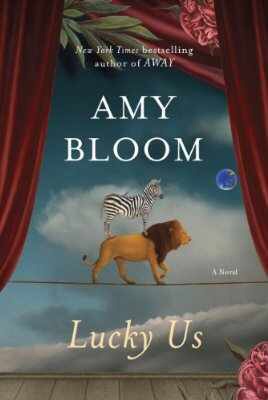
Review: Lucky Us by Amy Bloom

20140728-154355-56635463.jpg There’s nothing quite like having a sister to help you through life. In Lucky Us, the expectation is that Iris will take care of her little sister Eva after their loved ones abandon them. But it is Eva who holds together the relationship, with dim hope and quiet strength. The sisters embark on an adventure like no other, opening their eyes and their lives to worldliness and shallow sophistication. They try – but fail – to piece together a family. They try again. And again.

Lucky Us is about losing a family and finding a family. It’s about the damage that a mother and father can do and undo. It’s about making a life out of nothing but the kindness of strangers, and then recognizing that kindness as the only love you’ll ever know.

This book is historical fiction, set during the 1940s, referencing the war and its horrors, and illustrating the stunning commonalities among Jews, Germans, and Japanese. I don’t even like historical fiction, but I was taken in by the human facet of the decade. It read so much like contemporary fiction that I forgot what decade I was in. The crafting of this book is exceptional, the format perfect for the story, and the writing is tight, with every substantial paragraph meaning more than you think.

Lucky Us is hopeful. Eva shows how a young woman can endure much – maybe not with joy but with grace – and find acceptance for the life she has.

I found Eva so impressive, gracious, and strong. The grand finale in Eva’s life is the return of two loved ones. Adding them to the one who never left is Eva’s happily-ever-after finally coming to fruition. Lucky, indeed.

–calliope

Note: Amy Bloom will give a free talk about LUCKY US on Friday, August 1, at 7p.m. at RJ Julia Booksellers in Madison, Connecticut.

buy LUCKY US

Preview: Hope at Dawn, by Stacy Henrie

01hope

“My love is fully and completely yours.”

Let me just say, I am learning to love these historical romances lately. This book is no exception. I’ll admit, I only wanted to read it because of the cover, It’s just gorgeous. And I assumed it was about a war, from the title, because I never read the blurb…again. This was also another book that is really hard to write about. I want to tell you the entire story, or just type out, “Read it.” But alas, I must do my best.

This book takes place toward the end of WWII and shows what the German-Americans had to deal with. The prejudices and silly laws were only a small part of what really went on in this story. But some of these things I never heard about. For instance, I learned that there was a law that you couldn’t speak German in public. Seriously?!?! These poor people couldn’t even talk to each other, in a language that was easier for them. Unreal.

But let me get back to the story…Livy left college early to come home and help on her family’s farm, while her older brothers went off to fight in the war. But needing to help out more, she found a job as a teacher, far from home, but was willing to move anywhere if it meant helping her parents. What she never expected was teaching German-American children and trying to stay neutral, during these very difficult times.

Friedrick, was home on a deferment, since his father was dying. So he was in charge of his house. He would do anything to prove his loyalty to his country, America. But some in the towns want them out. And they will do anything to make them leave. For instance, buy war bonds, or face jail time.

Friedrick starting help out at the school and found himself smitten with Livy. But knowing that they can’t ever be together, he tries to stay away. He keeps his friendship secret, so she can’t get into trouble, like the last teacher. But unfortunately, trouble seems to find them anyways.

“Standing for the truth will always come at a price, Friedrick, whether it is being bold and sure or silent and strong. Neither one is easy.”

This was a roller coaster of emotions. One moment, I was feeling so happy that they were possibly going to together, then the next minute something horrible happens. I was on the verge of my seat, half the time. I was just fascinated with all the historical information throughout this book. But mostly, I loved the sweetness and slow buildup of their relationship. I would call this a christian historical romance. There was a lot of praying and Bible reading, which I found refreshing. And there was definitely enough heartache to keep my tears flowing also. A complete ride.

What these two people had to endure, in the name of true patriotism and true love, was was just wild. But they would do it over and over, if it meant they could be together.

Knowing that this book is #1 in a series, makes me so very happy. I can’t wait to read the next book, Hope Rising, in December.

~Melpomene

I received this ARC, for an honest review.

Releases June 24

Buy Hope at Dawn (Of Love and War) now

B&N has Hope at Dawn for preorder.

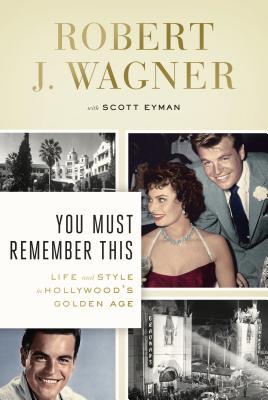
Review: You Must Remember This: Life and Style in Hollywood’s Golden Age

18114061A little change in direction from my “normal”, for lack of a better word, reading habits occurred over the last week. I know, the shock! However, once in a while is quite refreshing.
I was browsing NetGalley (that site is more addicting than social media!) and I came across a memoir of sorts from Hollywood actor Robert Wagner. Now, I can’t really say that I’m a particular fan of Wagner – there’s nothing wrong with him, but he’s just never really been on my radar. However, his memoir promised to be filled with fascinating anecdotes, scandalous secrets, a comprehensive history of the old Hollywood system and an “opportunity for readers to live vicariously through one of its most beloved leading men”.
I’m happy to say that this book did live up to its promises. It provides a really interesting history of Los Angeles, Hollywood, and the surrounding areas. Although it gets tedious on occasion, the historical aspect to this memoir does help to create context and insight into the lives and attitudes of the early actors and studio heads. To read about the slow, but steady, building of the Los Angeles area and its early players, taught me quite a bit.
Wagner doesn’t just give us a history lesson though; Famous actors including Cary Grant, Norma Shearer (arguably the biggest diva and brat of the 20’s and 30’s), are profiled through several stories and fun tidbits. Hearing about how certain actors would buy up whole floors of hotels for their extramarital affairs, was quite entertaining! We get to hear the parties (and they would give today’s parties a run for their money) he went to, personal stories from his friendships with certain stars, and a lot of stories that were told to him.
This is a tell-all memoir, but one with history, and a little class. Wagner never sensationalizes, but gives you enough juicy gossip to keep reading. If you’re looking for something light and different, or have an interest in classic Hollywood, then I really recommend that you give this one a try.
*ARC provided by NetGally in exchange for an honest review*
You Must Remember This: Life and Style in Hollywood’s Golden Age

Until next time.
Pegasus.

The Anatomy Lesson by Nina Siegal

18077844For those of you that love historical fiction, this may be a book for you. I’m personally not a huge historical fiction fan, and I generally hold everything up to a few favourites I’ve read in the past. Not fair? You’re right, it isn’t but unfortunately I can’t help it!
The Anatomy Lesson is set in Holland in the 1600’s. It follows several characters around the time in which Rembrandt was commissioned to paint one of his most famous pieces: The Anatomy Lesson of Dr. Nicolaes Tulpe. Each of the characters in the story all have something to do with, or influence the events around this painting. The general premise of this book is interesting and it would have made a really good novel. However, in my opinion, there were too many flaws that didn’t allow me to enjoy it as much as I should have.
First, let’s talk about the structure. The story is initially divided into two narratives. One set in 17th century Holland, and the in modern day Holland. The latter narrative revolves around an art historian who is examining the painting and trying to repair it back to its former glory. To me, this narrative really wasn’t necessary. It did not add anything to the plot.
The other thing that bothered me (and it might not bother others), was the constant change of tense and personal narrative. One minute someone is speaking in 1st person and the next 3rd person. I’m sure there was a literary/personal reason for this, but it just grated on me.
This is a short review, because as you can probably tell, I didn’t really enjoy it. However, if you enjoy historical fiction, and want something different than the usual 16th century royal family sagas, then give this one a go, and form your own opinion. There is definitely potential…

~ Pegasus.

The Anatomy Lesson: A Novel