
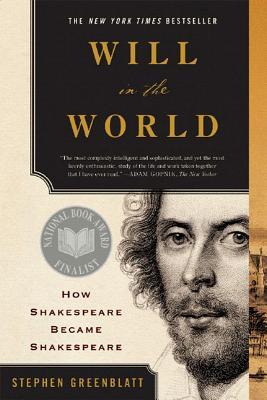
 Stephen Greeblatt is touted as the preeminent authority on the study of Shakespeare, and for the longest time, I have been meaning to read some of his work. It’s taken me a while, but I finally got there! As someone who predominantly reads fiction, getting through this nonfiction book took a little bit longer than usual. However, it was well worth it.
Have you ever been interested in what influenced Shakespeare and his plays/sonnets? Of course, there are many theories out there that claim to have some insight into the motives behind the works, but so many of them are based upon urban legend and propaganda, that it is difficult to separate the truth (or as close to the truth you’ll get without actually interviewing The Bard himself) from hyperbole and outright lies. In his book, Greenblatt examines what little remain of historical records relating to Shakespeare, his family, and other figures of the time, and bases his theories upon historical and sociological context. Greenblatt quite clearly states that some of his theories are based both upon the scarce historical records available and some educated conjecture.
Whilst, Greenblatt admits that his theories cannot be taken as the ultimate indisputable truth, with over 45 years of professional experience devoted to Shakespeare studies, this is probably the closest to accuracy as we’ll get for a while.
As I said above, reading this piece of nonfiction took a while to get into. Once I got into it however, his style of writing began to read like fiction. Greenblatt does not assume that we’ve all taken graduate courses in Jacobean drama or 17th century history, but nor does he belittle his reader; Greenblatt’s narrative takes us chronologically through the known history and events of Shakespeare’s time, and presents us with an entertaining, but educated, glance into the influence behind many of the plays that we’ve all known and loved (or hated!) over the years.
~ Pegasus.
Buy it here: Will in the World: How Shakespeare Became Shakespeare
Pegasus
Review – The Best Exotic Marigold Hotel by Deborah Moggach
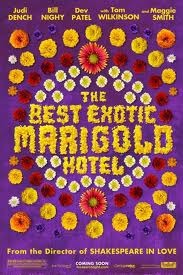 Without a doubt, this novel is a permanent contender in my top 5 favourite read stories of the past few years. Where to even begin? Well, you can read the blurb to discover the plot, so I shall refrain from repeating it. I picked this book up purely on a boredom impulse one day when I was on a business trip, and I am so glad I did! This story is perhaps one of the best examples, since Arundhati Roy’s ‘God of Small Things’, of the complex Anglo-Indian relationship, post-independence. Whilst it doesn’t rub it in your face and whack you over the head with a stick, the story does get you thinking about the effect of colonialism, and the aftermath that it brings. Ideals are presented, and turned on their head once reality kicks in, and Deborah Moggach does this in a very stark fashion, without coming off a preachy.
The mix of characters, whilst completely over the top, are a refreshing bunch of fun, quirky, old-school (some being inherently racist/ignorant), Raj-yearning individuals. The reader to form a definite and firm opinion of each character due to Moggach’s expert character presentation and the changing shift in language and style used when writing from each perspective.
Now, the style of the novel is very “British” in regards to some of the things that happens to the characters and how they react, or in fact, how the reader acts when “witnessing” these calamities. It’s not quite as “British” as Rowling’s The Casual Vacancy (many readers this side of the pond did not like this novel), but it is definitely not what you might be used to. To say this isn’t your conventional story would be an understatement; Moggach makes you laugh in the wrong places, gasp in shock and then smile, and completely refreshes your pallet for future stories.
~ Pegasus
You can buy this relatively short story, that is bound to leave a lasting impression, here:
The Best Exotic Marigold Hotel: A Novel (Random House Movie Tie-In Books)
Review – LIFE The Day Kennedy Died: Fifty Years Later: LIFE Remembers the Man and the Moment by the editors of LIFE.
 I am a self-confessed conspiracy nut, and make no apologies for it. Saying that however, I am an intelligent conspiracy nut – I like to review the evidence and make my own conclusions. Now, we’ve all seen in the last few weeks a flurry of books being hastily released in order to coincide with the 50th anniversary of the day that President Kennedy was assassinated. Most of these have no merit, and are purely released to garner some money and attention. This is not to say that this book released by LIFE magazine isn’t making money – you still have to pay for it – but I would rather pay for another JFK book by a respected author/collaboration such as LIFE magazine.
Before we get into the review proper, I must warn you that this is a book with media – the original, unedited Zapruder film; it is only downloadable to tablets, Fires, etc… I’m not sure how the DTB edition deals with it.
This book covers events from the emigration of the Kennedy family from Ireland, right up until the horrible day in 1963. We are treated with many previously unseen personal photos, some in colour, some black and white, with a running commentary. As it is told in chronological order, there is a sense of a real narrative here, and it actually makes the read all the more shocking. Like I said above, I am conspiracy/history buff, so I thought I had known pretty much all there was to know about JFK, but I was wrong! LIFE magazine has a reputation for preserving history through photographs and articles, and I learnt a few new interesting things last night.
Due to the linear narrative, when it comes time to watch the Zapruder film, it really does pack quite the punch. Even though I knew what was going to happen, I still audibly recoiled and felt a bit sick. This was real life, with real people, and EVERYONE was affected somehow. That is proved in the chapter that collects the “where I was on that day” stories from random people from reporters, to Barbara Streissand, to Bill O’Reily. The Kennedy’s may have been economically out of touch with many Americans, but even when you have staunch republicans, and Russian leaders say that they were dismayed when died, you know that he was someone unique, and someone to look up to.
~ Pegasus.
Buy it here: LIFE The Day Kennedy Died: Fifty Years Later: LIFE Remembers the Man and the Moment<
Review – King and Maxwell, by David Baldacci.
 I’ve been a fan of David Baldacci for about the last 10 years or so, so when I received this ARC to review, I jumped in reading straight away. As you can probably start to tell by now, my taste in genres is pretty varied. Baldacci is my go-to author for my ‘fluff’ reading; he is like James Patterson, only twice as good and actually writes his own books (allegedly!).
This book is the latest in the Sean King and Michelle Maxwell series – a buddy cop type series, but with two former Secret Service agents. I really like this series because these two characters have some genuine chemistry and seem half believable. It’s not too late to start this series as there are only 5 other books before this one.
The plot is your standard ‘two agents must save the day against juggernaut government factions that kill at will’ etc, etc… However, this plot has a contemporary edge to it, which makes it seem like it could potentially happen in today’s age. The pace of the writing is fast and exciting – before you know it, you’ve read ¾ of the book!
I won’t for one second say that this book will invoke any kind of emotional tidal wave, make you ponder the meaning of life and being, challenge your inner self, or anything like that. It will however, serve as an entertaining and quick read, one that doesn’t disappoint because you know what you are getting, and it doesn’t fail to deliver. I highly recommended this for fans of Baldacci’s King and Maxwell series.
Book provided by NetGalley for an honest review.
~ Pegasus.
Buy It Here: King and Maxwell (King & Maxwell)<
Review – The Headmaster’s Wager by Vincent Lam.
Review – The Headmaster’s Wager by Vincent Lam.
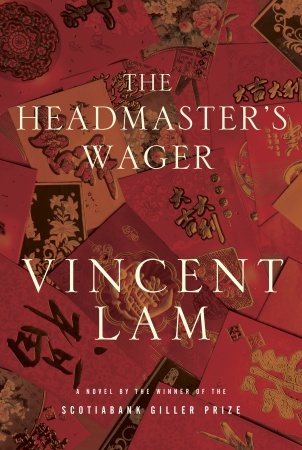 This was a book that I went into blind. I read a vague description months ago, but when I read it this past week, I couldn’t remember what it was supposed to be about. I am glad that it turned out this way, as it gave me a pleasant surprise throughout my reading!
There are many well-known books that examine what it was like to be fighting in the Vietnam War, particularly from the American side. It is rare that we find a story that examines the war from the perspective of a Chinese immigrant living in Vietnam, and here, Lam has created a perfect cast of characters, all sharing similar experiences.
I’m not going to reveal any of the plot, as that would act as a disservice to the book. However, what I can say is that in The Headmaster’s Wager, Lam has created a world where nothing is perfect, and there is no right or wrong. Lam does not condemn, nor does he laud. Each character has their own faults, and yet their actions are all taken to survive in one way or another. An action that you may believe to be beneficial, may not end up being so, but yet out of that misstep, comes another result that may ultimately be successful. Lam expertly weaves together the idea that every action has a consequence, and no matter if it results in tragedy or happiness, life will go on.
The timeline jumps from various decades, beginning in the 30’s and ending in the late 1970’s. This could seem jarring in many books, but Lam presents in such a fashion that it becomes essential to character building. Like I said above, some of the actions the characters take can seem extreme and excruciating, however, just when we think we hate a character, or what they do seems unrealistic, we are transported back into another decade and some of the motive is explained.
Whilst this is ultimately a story of the human condition in a time of war, there is also an interesting historical element that Vietnam War enthusiasts, or even those with just a passing interest, may enjoy. I knew very little concerning the war before I started reading, and the story teaches you several different aspects to the war, the different people/countries involved, and first hand experiences of what life was like for the people in Vietnam (whilst this book is a fictional tale, Lam’s family emigrated from Vietnam, so some parts are based on recollections that he heard from his family), and so you come away feeling like you understand the time period a lot more.
I hate to make this comparison, but in a sense, it is like the film Titanic; you ultimately know what is going to happen due to hearing bits and pieces here and there about the true life events, but you end up hoping that events take a different course, and you learn about the minor players, the behind the scenes action, and all the cogs that make the motion. This suspense that Lam creates really is brilliant.
If you’re looking for a read that will fill you with the spectrum of emotions, a read that will pique an interest in the history behind the Vietnam War, a read that will make you question human motive, then this is the book for you. Take a leap of faith and jump into this book without reading the blurb, or any plot reviews.
~ Pegasus
Buy It Here: The Headmaster’s Wager
Review: The Little Stranger by Sarah Waters
 Sarah Waters is known primarily for her erotic Victorian era fiction, however, she takes a detour in her latest (well, latest being 2009) offering. Waters employs the classic first person narrative in the form of Dr Faraday – the ever so sensible and stiff upper lipped family doctor – and this lures the reader into a sense of trust and comfort whilst they get ready to “listen” to the story.
Set in 1947, two years after the war has ended, and a time in which the country was in the midst of economic recovery and social reform, The Little Strangers tells the tale of a grand house that was once the epicenter of social royalty in the early 1900’s. Throughout the years, the house and indeed the owners, have crumbled into financial despair. Without giving too much away, let’s just say things aren’t necessarily what they seem at Hundreds Hall.
As mentioned previously, Waters is known and celebrated for her Victorian era erotic fiction. As shown in this novel, Waters has proved she is not just a one trick pony; the characters are what drive this novel, and Waters is exceptional at bringing them to life. A great percentage of the novel is devoted to build up, and making the reader care for the characters. It takes a bit of getting used to as readers are used to instant gratification in most of today’s novels. Waters has stylized her writing and pace to match those of Henry James, Wilkie Collins and Emily Bronte. Through this choice in style, it allows the reader to better imagine the world of 1947. In fact, Waters is so accurate, that I believe this is the first book that I’ve read, since Enid Blyton, that doesn’t have any swearing, violence, or sex. It is a good old fashioned ghost story, told in a way that will feel authentic, and yet ageless.
At over 500 pages in length, this is not a quick Halloween night read. This novel is to be savoured and devoured. The Little Stranger is an intelligent, scary, atmospheric, and slow (in a good way) read. Well worth the read if you are looking for something different this Halloween! Just try not to scream too loudly if you hear a floorboard creak!
Buy it here:

Review: Never Let Me Go by Kazuo Ishiguro

Never Let Me Go, is one of those books that doesn’t fall into a neat little genre. It’s like life; it isn’t perfect, not everyone is going to like it along the way, but boy, it is fascinating! Now, I realize that this has been sitting on the shelves since 2005, however, I believe that it is nice to pick up an older book now and then and rediscover, or, indeed discover, the epitome of a multi-faceted work of genius.
Like I said above, Ishiguro’s novel cannot be defined in one genre; romance, dystopian, drama, all play their respective hands throughout. I think this is why I loved it so much. I tend to not be a fan of romance or dystopia, but in little bits, they definitely work, and even complement one another. With merging these genres, Ishiguro actually presents an almost deconstructed version of each one: In a typical (and I say typical because I’m aware it’s not always the case) dystopian novel, the reader is presented with a world that is at its knees; it is often harsh, grey, and survival instincts are at an all-time high. In Ishiguro’s novel, the reader is presented with a dystopian world in the form of an upper middle class British boarding school. Now, we all know that there must be some kind of untowardness when the Brits are involved (after all, this isn’t a Sophie Kinsella novel, or a Merchant-Ivory production!), and the assumption would be correct. I won’t spoil the surprise of what makes this novel have its dystopian theme, but suffice to say, Ishiguro was writing ahead of his time, as we are ever so slowly seeing this topic become ever more prevalent.
It could be argued that the romance aspect to the novel is slightly more conventional. We are presented with a classic love triangle, where boy loves girl (or girl loves boy) boy/girl can’t verbalise said feelings and ends up seeing another person as a rebound. However, those of you that know me, KNOW that I wouldn’t read a book with such a simple theme. Ishiguro presents this theme and turns it on its head by making the reader love and hate each individual character. Not one of them can claim the moral high ground all throughout the novel.
Overall, this is a novel that will infuriate you, make you smile, make you think, make you gasp, and may even make you cry. It’s an unflinching look at a controversial topic, whilst employing classic themes and presenting them in a unique way. Even if you don’t like it, Never Let Me Go, is worth picking up simply for the above mentioned points. Take a leap of faith and have your opinions and comfort zone challenged.
Pegasus.
Buy it now – Never Let Me Go
 Random Book Muses